
i wanted to run a social experiment every month this semester.
the goal isn’t data, exactly, though i’ll collect it. it’s more that i have questions about people, about the way we move through the world on autopilot, about the gap between what we think we’re doing and what we’re actually doing. and i think the only honest way to answer those questions is to build little situations, watch what happens, observe carefully, and write it down.
cheers to february.
the setup:
i’ve been thinking about ambition a lot lately, specifically the way it operates at places like penn, where i go to school. not ambition as in drive or hunger or the desire to build something real. i mean the reflex version, the one that fires before you’ve thought about it.
we all got “here” because we were good at wanting things, or at least performing the wanting convincingly enough that someone in admissions believed it. and somewhere in the process of getting here, the application became its own kind of muscle memory. see something selective, apply. see the words limited cohort, reach for your phone. the behavior is so rehearsed from semesters of club rush and internship season that it basically runs without you.
i wanted to know: how far does that run? if you gave people absolutely nothing except the shape of an opportunity, no description, no organization, no explanation of what they were signing up for, just the skeleton of prestige, would they still apply?
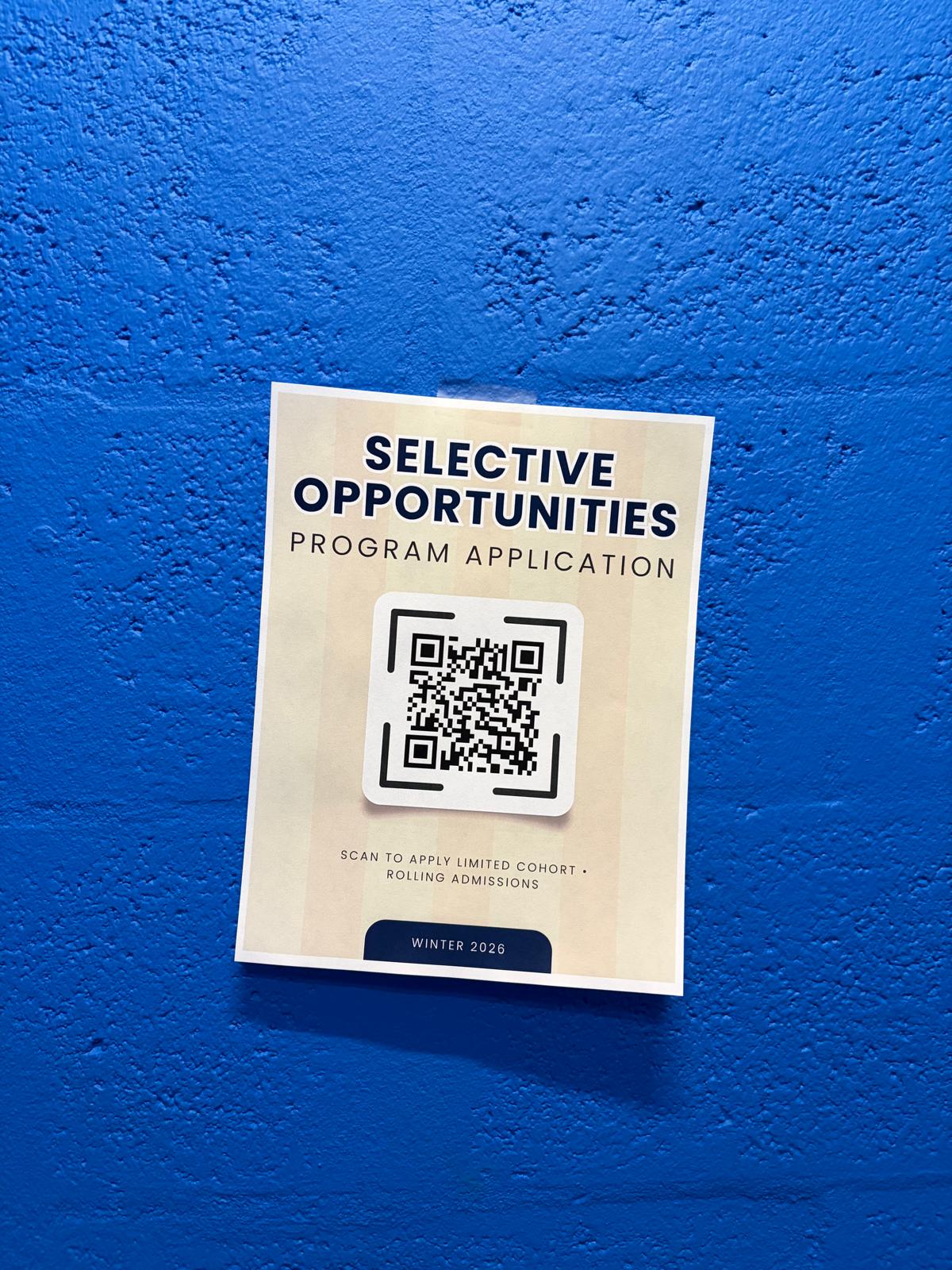
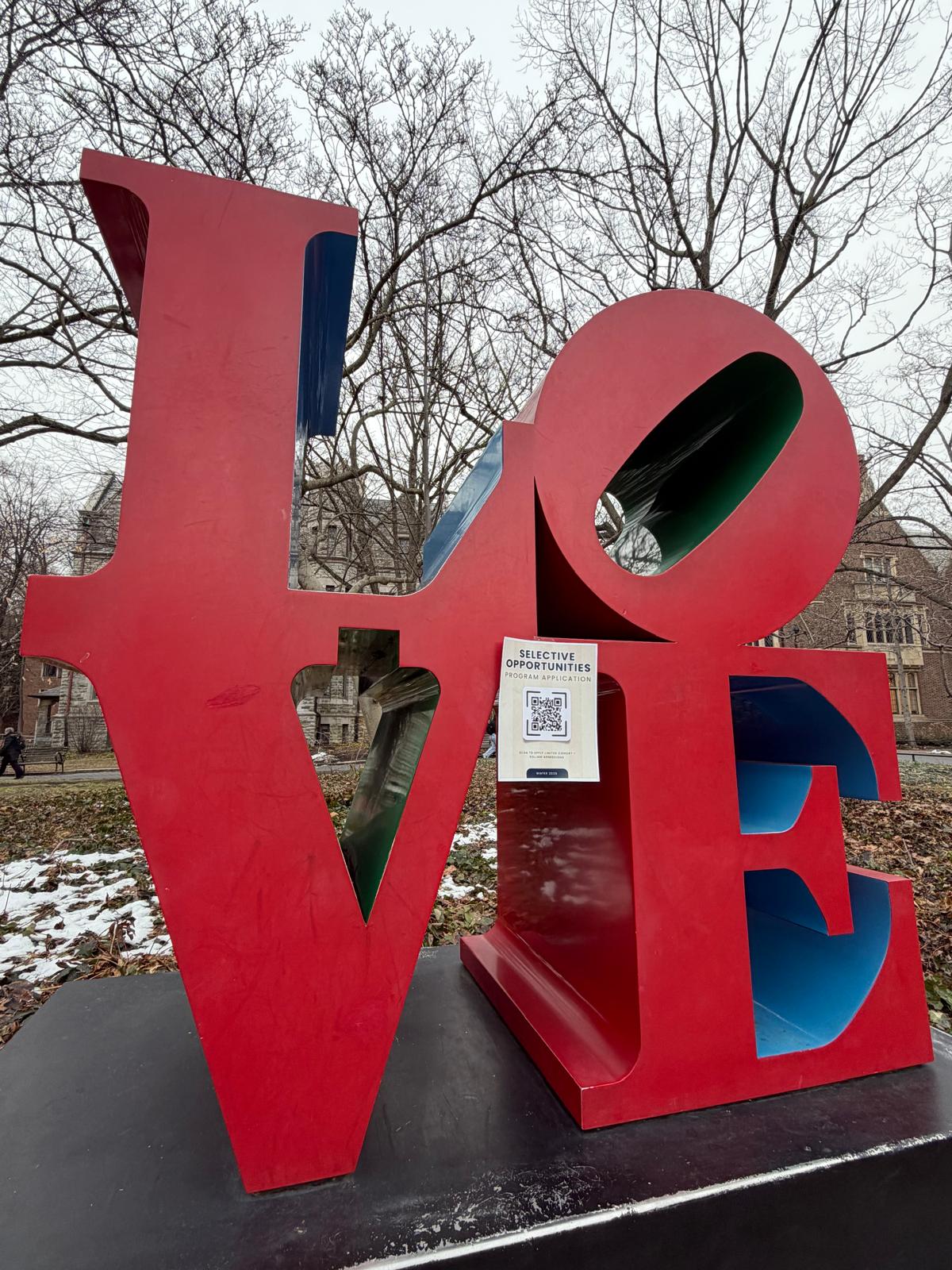
on february 6th, kelly (shoutout kelly, who i had to initially convince via the form of a brodate1) and i spent an afternoon walking around campus with a stack of printed pages and a roll of tape. we went across locust, from hill to huntsman, which is roughly the densest strip of foot traffic at penn and we put up 27 posters.
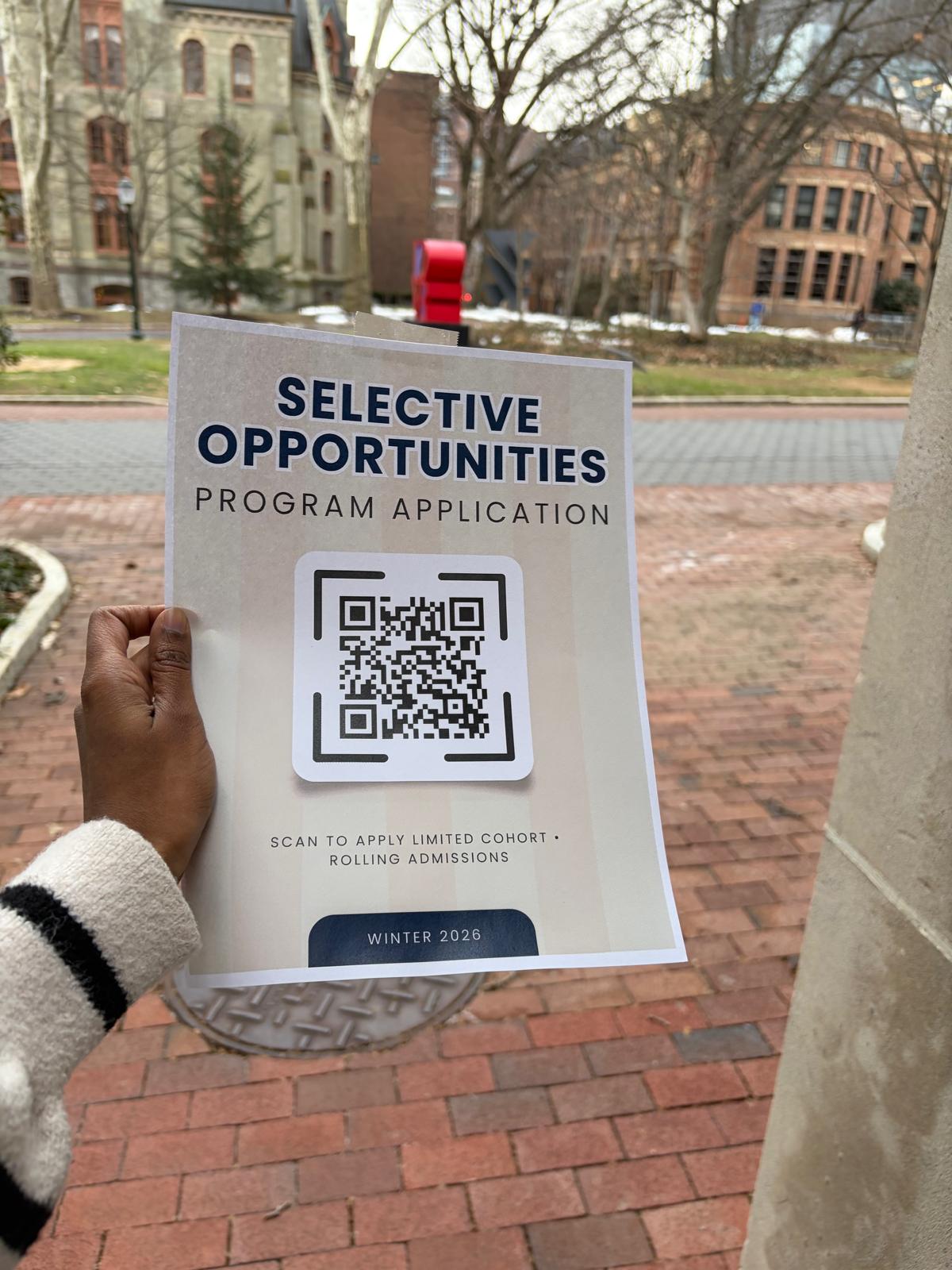
they were plain white paper with no logo, no organization name, nothing that would tell you who made it. just:
SELECTIVE OPPORTUNITIES PROGRAM APPLICATION
a QR code. winter 2026. limited cohort. rolling admissions. kelly kept asking me if i thought anyone would actually scan it, half laughing, and i said i genuinely didn’t know, which was true.
the QR code linked to a google form. nine questions: the standard fields, name, email, school and major, class year, how you heard about it. and then the three that mattered:
-
why are you interested in applying?
-
what makes you a good fit?
-
upload your resume.
and that was it. a blinking cursor and a text box and nothing else, not because there was nothing else to give them, but because the program didn’t exist.
a fraction of the posters came down within the first 24 hours. i don’t know who took them. probably facilities, or maybe someone who clocked it, or maybe another organization that didn’t want competition on that particular wall. the removals definitely affected my sample.
i was in the middle of something else entirely when my phone buzzed with the first form response. i remember staring at it for a second, the name, the school, the major, all filled in neatly, a resume attached, two paragraphs in the text boxes. and i thought: okay. so yes.
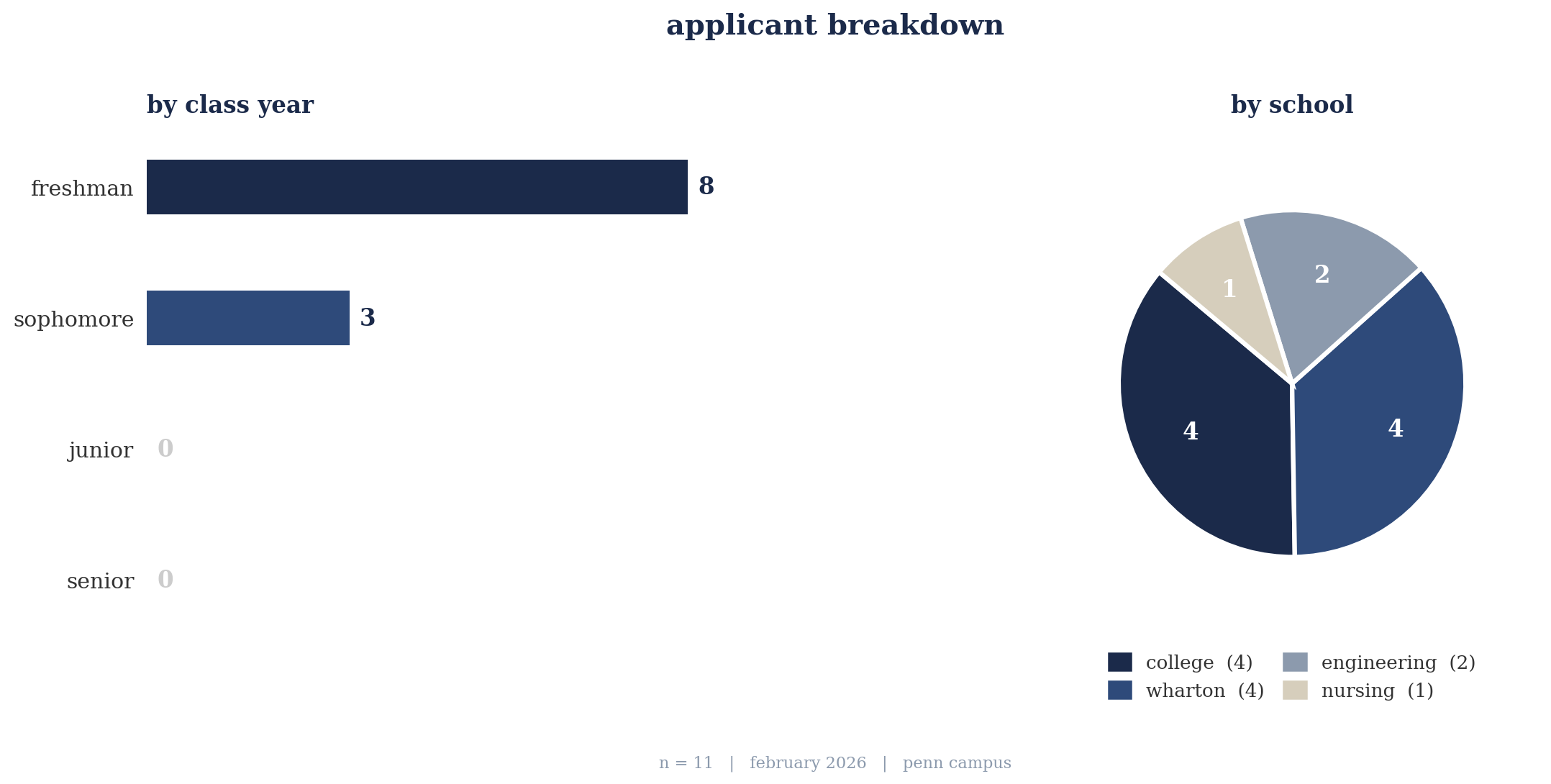
by the end of three weeks, 11 people had submitted complete applications. they had written personal statements. uploaded resumes. answered the question ‘what makes you a good fit’ for a program they knew nothing about.
the results:
8 freshmen. 3 sophomores. zero juniors, zero seniors.
i keep coming back to that breakdown. upperclassmen have built something that freshmen haven’t yet, a kind of scar tissue from enough cycles of hope and “we regret to inform yous” that fires before the first click and asks is this actually worth my time. freshmen don’t have that yet. the reflex is still clean, still untouched by the specific embarrassment of having wanted things that turned out to be nothing.
there’s also a small chance the posters were simply near a lot of freshman and sophomore housing, and the distribution was pure coincidence. the sample is too small to rule that out.
the majors spread across wharton, engineering, college, and nursing. the pull of the word selective is, apparently, universal.
reading the applications themselves was a strange experience. i wasn’t reading about a program; they didn’t know what the program was. i was reading people’s first instinct about how to perform being worth selecting, and the patterns were consistent in a way that was almost eerie.
almost every response cycled through the same three notes: i am driven. i am a leader. i want to grow.
“I’m passionate about leveraging my skills to contribute to an impactful community. I’ve always been drawn to selective programs that challenge me to operate at a higher level.”
this applicant had no idea what the program did. but they already knew, with complete confidence, how to want it correctly.
“As someone who takes initiative and thrives in collaborative environments, I believe I bring both the energy and the execution mindset this program is looking for.”
execution mindset. for a program with no described deliverables. the phrase arrived fully formed, the way these phrases do, as if it had been sitting in a folder somewhere ready to be deployed whenever something called itself selective.
“I believe that this opportunity immediately aligned with my goals. I’m a freshman still figuring things out, but I work hard and I’m not afraid to put myself out there.”
this one landed differently. there’s a honesty in still figuring things out that the other applications had ironed out, and yet the logic underneath is the same: i heard about it, it aligned, i applied. the reasoning is circular. the application is the goal.
every single one of them albeit two2 submitted a standard, well formatted resume for a program called selective opportunities, which does not exist.

the conclusion:
i’ve been sitting with this and i think the thing that surprises me isn’t that people applied. it’s how they applied. with complete fluency. with the full vocabulary of ambition deployed correctly, aimed at nothing.
there’s something in behavioral psychology called auto-pilot behavior, which describes actions so deeply rehearsed that they bypass the part of the brain that evaluates them. the stimulus fires, the response follows, and the question that would slow everything down (“wait, what is this actually?”) never gets asked because nothing in the environment trained you to ask it. everything trained you to apply.
not one of the 11 people emailed to ask what the program was. not one of them wrote ‘i couldn’t find more information about this’ anywhere in their application. they filled in the blanks as if the blanks were self-explanatory. and in the system they’d been handed, they were.
i’ve done versions of this myself. i think about all the times i’ve applied to things because they sounded important before i knew what they were. i think about what it says that the question ‘what are you applying for’ is harder to answer than ‘why are you a good fit.’
i also think about what it means to exist inside the environment i’m studying. penn is a place that runs on momentum, and there’s something genuinely good about that, the way ambition here is contagious, the way being around people who never stop can pull you forward even when you’re not sure where you’re going. i’ve been this person. i am this person. but sometimes, when you actually pause for a second, you feel how much it costs. and yes, there’s real merit in choosing what’s worth your time, except the advice you get from everyone around you is that you have to try a thousand things to land one. the choice starts to feel less like discernment and more like a luxury you can’t afford. and then you stop asking whether you want something and just reach, because reaching is what’s rewarded, and at some point the reaching becomes who you are.
future considerations:
this was stage one. what i want to build toward is a multi-round process: the form, then a second round with harder questions, then a video response, then a zoom interview, fully staged, someone sitting on the other end asking about your vision for the program you still don’t know anything about.
i want to find the exact moment where it stops. where the autopilot finally disengages and the person on the other end thinks, “actually, wait a second”. most importantly, i want to reach a wider range of people, and definitely larger number.
based on the data, i’ll target freshmen specifically next time. there’s something about first year, the not-yet-knowing, the accumulation of credentials before you understand what you’re accumulating them for, that i want to understand better. i think they’re the most honest version of all of us.
i want to say clearly: this isn’t a gotcha. the people who applied aren’t naive. they’re shaped, the same way i’m shaped, by systems that spent years rewarding exactly this behavior. the reach is rational within the logic they were given. i’m not interested in pointing at them.
what i’m interested in is the logic itself. the architecture that produces people who are extraordinarily good at performing readiness for opportunities they haven’t examined. the way prestige functions as its own kind of proof that something is worth wanting.
all the posters are down and 11 applications sit in a spreadsheet, which is a strange artifact of something i don’t fully have words for yet.
but i keep thinking about the question none of them were asked: what are you actually applying for.
i wonder what they would have said.
sahiti
upenn, february 2026
note: applicant quotes are composites drawn from real response patterns, not exact words. individual identities are fully anonymized. this experiment was conducted independently as a social observation project.


